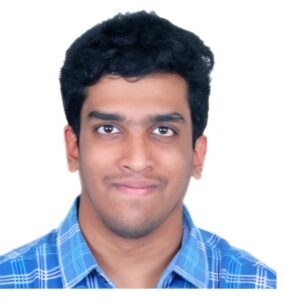
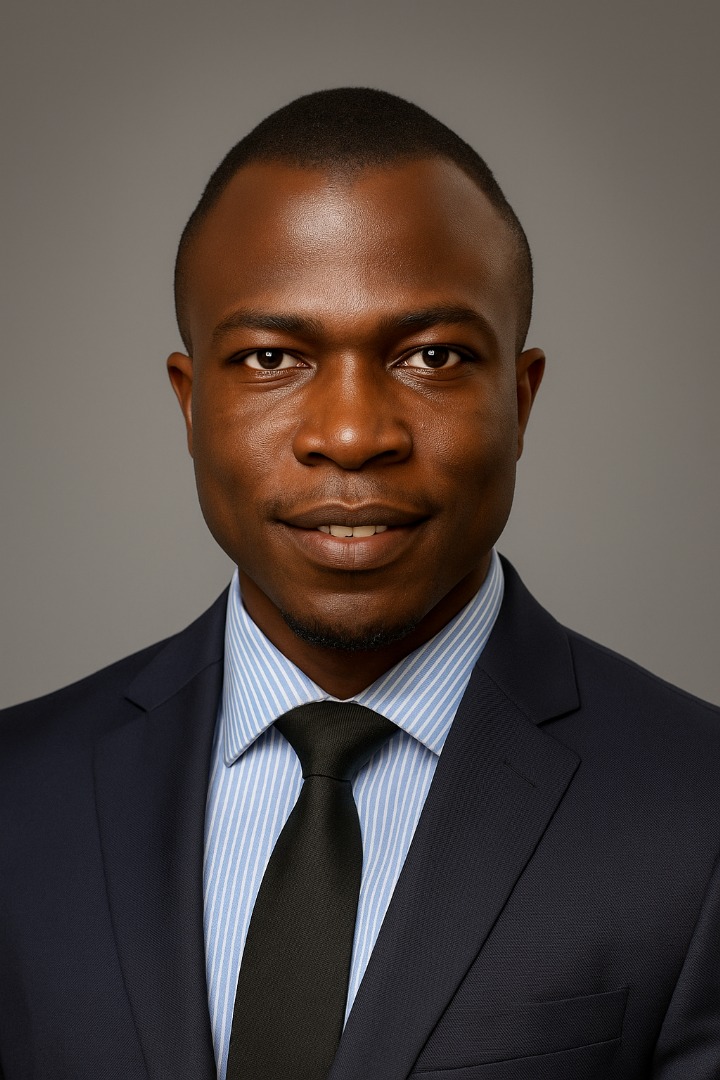
T. Naveen Keerthi is a MBBS student at MIMER Medical College (MUHS) with research interests spanning neuroscience, neurodegeneration, neurosurgical outcomes, oncology, immunotherapy, and computational modeling. He is a Gold Medalist and State Topper in Pathology, with distinctions across all subjects in both First and Second MBBS.
He currently serves as the Research Lead for the IEEE Neuromathematics Project (Pune Section), where he is developing computational models of hippocampal network degeneration to study structural and functional adaptation in neurodegenerative disease. He is also a Research Trainee in the Computational Brain Modeling Group at IIT Madras, working under Dr. Srinivasa Chakravarthy on systems-level modeling of brain dynamics and computational frameworks in cognitive neuroscience.
In addition, he is a Researcher with the Bowers Neurosurgical Frailty & Outcomes Lab, contributing to data-driven investigations in neurosurgical decision-making, frailty assessment, and postoperative functional prediction—an area closely aligned with his long-term goal of pursuing neurosurgical oncology.
He serves as the youngest and the only undergraduate Review Board Member for Acta Scientifica Neurology, contributing to scholarly peer review in clinical and computational neuroscience , along with being a peer reviewer in the NEJ and BMJ Journals , as well as IJRSIS , IBRO as well as Yale Journal of Biology and Medicine
His prior research experience includes work at ACTREC (Tumor Drug Resistance Lab) on molecular determinants of chemoresistance, and training at Tata Memorial Hospital (Parel) in the CART Cell Therapy Unit and Medical Oncology services, where he gained exposure to cellular immunotherapy workflows and multidisciplinary cancer management.
As a Principal Investigator at MIMER, he leads studies on neurofibrillary tangle distribution in the olfactory bulb in suspected Alzheimer’s disease, and on morphological patterns of anemia in tuberculosis, alongside prior ICMR-STS-supported work evaluating BLS proficiency in underserved communities. He has additionally worked in nanoparticle-based targeted drug delivery at the Central Research Laboratory, MIMER.
He will be joining National Institute of Cell Sciences to work on infectious biology and immunology and will also be working in the Centre for brain and mind, NIMHANS to work on stem cells in translational psychiatry, as a visiting scholar.
His academic trajectory integrates histopathology, computational neuroscience, neurosurgical outcomes research, tumor biology, and translational therapeutics, with a long-term aspiration toward a clinician-scientist career in neurosurgical oncology.