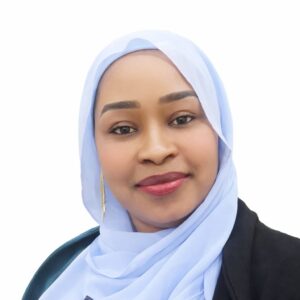
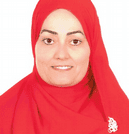
Dr.Rawia Alfadil Sharif Mahmoud
Assistance Professor
The Regional Institute of Gender, Diversity, Peace and Rights (RIGDPR)
Country
Sudan
Education
Doctor of Philosophy degree in Sustainable Rural Development, School of Rural Extension Education & Development (REED), in Ahfad University for Women, 2019, Omdurman, Sudan.
Degree in Gender and Development from the Regional Institute of Gender, Diversity, Peace and Rights (RIGDPR), Ahfad University for Women, 2014, Omdurman, Sudan. Specialized Gender and Development.
Bachelor of Sociology Science, Honors degree, (Rural Extension, Education and Development from School of Rural Extension Education and Development (REED), Ahfad University for Women (AUW), Omdurman, Sudan.
Journal
International Journal of Research and Innovation in Social Science (IJRISS)
Biography
Dr. Rawia Alfadil Sharif Mahmoud is a distinguished Sudanese sociologist and academic specialist in gender dynamics, sustainable rural development, and community-led food security frameworks. She holds a Bachelor of Sociology Science with honors, an advanced degree in Gender and Development, and earned her Doctor of Philosophy (Ph.D.) in Sustainable Rural Development from the School of Rural Extension Education & Development (REED) at Ahfad University for Women. Currently serving as an Assistant Professor of Sustainable Development at the Regional Institute of Gender, Diversity, Peace and Rights (RIGDPR), Dr. Mahmoud’s research centers closely on the economic agency of female farmers, indigenous climate change adaptation strategies, and sub-Saharan food security paradigms. Her scholarly output features multiple peer-reviewed studies in reputable journals, including Advances in Applied Sociology, alongside published textbooks analyzing development communication, exclusionary social structures, and women-led micro-enterprises.Complementing her academic baseline, Dr. Mahmoud possesses a robust public service and development record, having served for a decade as the Vice Dean of Student Affairs at Ahfad University for Women. As an expert evaluator and field consultant, she has spearheaded key socio-economic mapping and monitoring initiatives across Sudan for prominent international bodies, including UNICEF, UNHCR, the World Bank, CARE International, and the European Commission. Notably, she has led high-impact field studies on pastoralist resilience, female agrarian livelihoods in the Horn of Africa, and multi-round household monitoring evaluations for female genital mutilation (FGM) abandonment initiatives in East Darfur. A professional member of the International Society for Development and Sustainability (ISDS) in Japan, Dr. Mahmoud is highly regarded for her extensive work in rural extension coordination, where she has engineered community-outreach campaigns across dozens of rural villages to enhance water sanitation, adult literacy, and reproductive rights.
Research Interests
Development Studies
Experience
10
Other Reviewer
India
Tunisia

India

Sierra Leone
India
No posts found
Submit Manuscript & Save on Publication Fees
Submit your manuscript now and enjoy discounts on APC! Publish with us for affordable, open access, and global reach