


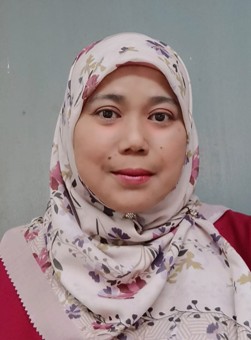
Mr. Ali Abdulkareem Mahmood
Lecturer
University of Information Technology and Communications, Baghdad, Iraq
Country
Iraq
Education
Master degree in computer science.
Academic promotion from Assistant Lecturer to Lecturer at the University of Information Technology and Communications
Journal
Biography
Ali Abdulkareem Mahmood Al-khafaji is an accomplished computer scientist, academic administrator, and workforce development expert at the University of Information Technology and Communications (UOITC) in Iraq. He holds a Bachelor’s degree in Computer Science from Dijlah University College and a Master of Computer Science in Information Technology from the National University of Malaysia (UKM). At UOITC, Mr. Al-khafaji plays a critical role in institutional administration as a Division Official within the Student Affairs Department. Additionally, he serves as a Career Development Center (CDC) Coordinator and lecturer, where he has spent four years directing impactful internship programs in partnership with international organizations like IREX and GIZ. In this role, he mentors university students on soft skills development, employment positioning, and corporate networking strategies, bridging the gap between higher education and the private sector.Complementing his administrative and career coaching leadership, Mr. Al-khafaji is an active researcher and skilled IT systems professional with over seven years of experience in computer science instruction, network infrastructure, and desktop hardware/software troubleshooting. His advanced research portfolio covers complex computational paradigms, including membrane computing (P systems), convolutional neural networks (CNNs) for medical tumor classification, pixel contrast-based medical image steganography, and hybrid firefly optimization algorithms for natural language processing. A versatile communicator capable of navigating multicultural dynamics, he possesses multilingual competencies in Arabic, English, Malay, and Kurdish. His logical problem-solving methodology combines decades of technical engineering literacy with a deep-seated commitment to student success and collaborative technological innovation.
Research Interests
Artificial Intelligence, Bioinformatics, Biomedical Engineering, Computer Science, Cybersecurity, Data Science, Information Systems, Information Technology, Internet of Things (IoT), Linguistics, Natural Language Processing, Quantum Computing, Robotics
Experience
15
Other Reviewer

Nigeria

Sri Lanka

Nigeria
Malaysia

Philippines
No posts found
Submit Manuscript & Save on Publication Fees
Submit your manuscript now and enjoy discounts on APC! Publish with us for affordable, open access, and global reach